

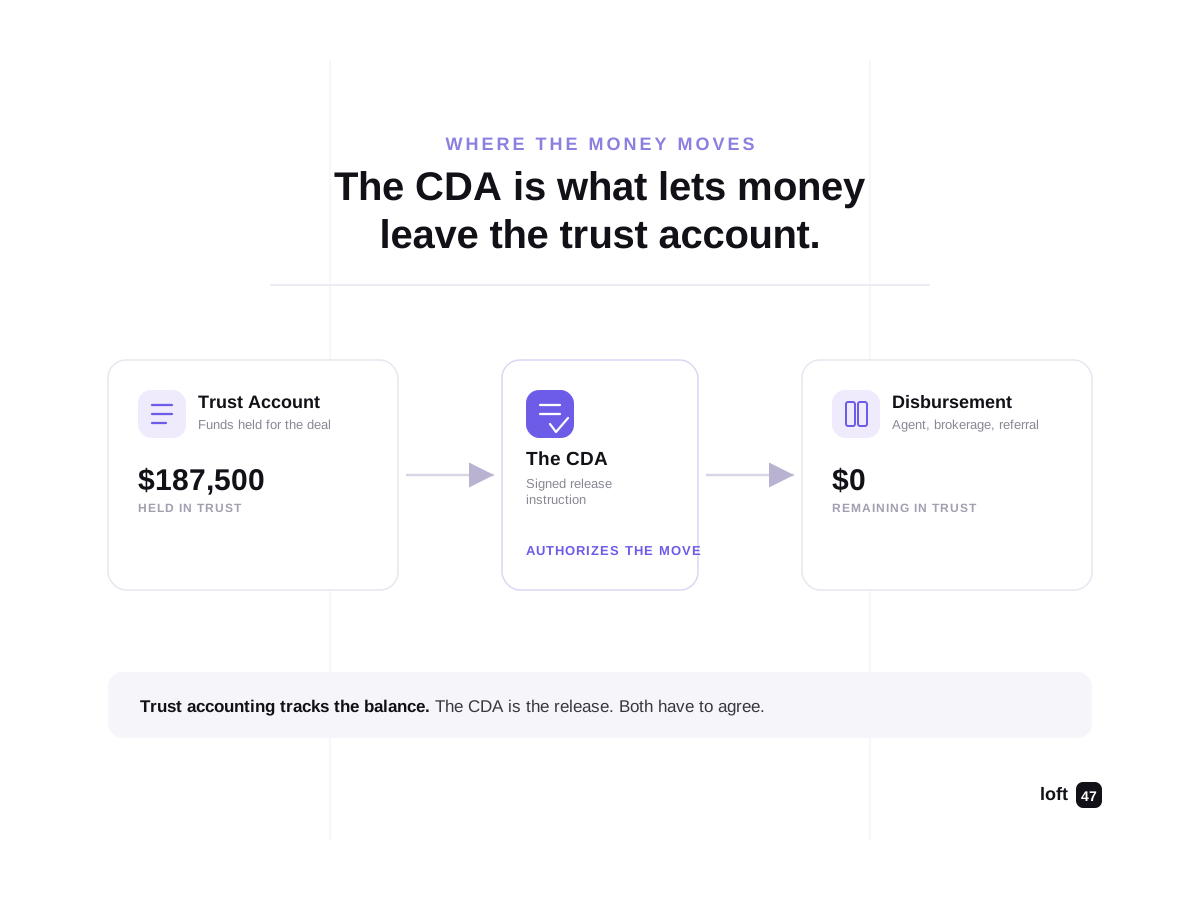
Trust accounting (or escrow accounting) and commission disbursement usually get treated as two separate subjects. Two different guides, two different training sessions, sometimes two different people handling them inside the same brokerage. In practice, they're one process with a hard seam in the middle, and the CDA is what sits on that seam.
A deposit goes into trust/escrow. At some point, some of that money needs to come back out and land with the right people. The document that authorizes that movement is the CDA. Understanding the connection matters, because a brokerage can have a perfectly reconciled trust account and still have a disbursement problem, or a clean CDA process and still fail a trust audit, if the two aren't actually tied together.
The path the money actually takes
Strip away the paperwork and the sequence is simple.
A buyer's deposit is received and goes into the brokerage's trust or escrow account, as covered in our guide to real estate trust accounting. It sits there, tracked in a sub-ledger tied to that specific deal, while the transaction moves toward closing.
At closing, the deal is done and the funds held in trust need to be distributed: commission to the agent, the brokerage's split, a referral fee, sometimes a portion to an outside brokerage. The Commission Disbursement Authorization is the instruction that tells the brokerage exactly how much of that trust balance goes to each party.
Once the CDA is signed and the funds move, the trust ledger updates. The sub-ledger for that deal drops to zero, and the money now sits in the right operating or agent accounts instead.
Trust accounting covers everything up to that release. The CDA is the release itself.
Why the seam is where problems hide
A trust or escrow account can reconcile perfectly, bank balance matching the ledger matching the sub-ledgers, and the brokerage can still have a real compliance gap if the CDA behind a disbursement was wrong, unsigned, or built off numbers that didn't match the deal.
The reverse is also true. A brokerage can have a clean, well-reviewed CDA process and still run into trouble if the disbursement isn't reflected properly in the trust ledger afterward, leaving a sub-ledger balance that no longer matches what actually happened to the money.
Both halves have to hold for the whole thing to be compliant. That's the part that gets lost when trust accounting and commission disbursement are treated as separate problems solved by separate processes.
What this looks like day to day
A few situations make the connection concrete.
A deal collapses after a deposit is made. The trust ledger needs to show the deposit coming back out, and the documentation authorizing that return needs to match the original deposit exactly. That authorization is functionally the same kind of instruction as a CDA, even though the money is going back to the buyer instead of an agent.
A referral fee comes out of a co-broke deal. The CDA has to route a portion of the trust balance to an outside brokerage, and the trust ledger needs to reflect that outside party's share leaving the account, not just a lump-sum disbursement to the listing side.
A commission cap is hit mid-transaction. The CDA has to reflect the agent's current standing, not last month's, and the trust ledger disbursement has to match whatever the CDA actually authorized. If those two numbers were built separately, they can drift apart quietly.
Why this connection is easy to lose in a manual process
Trust accounting is usually owned by whoever handles the bookkeeping. CDAs are usually built by a transaction coordinator or admin close to closing. In a lot of brokerages, those are different people working from different documents, and the only thing connecting their work is whoever remembers to update both.
That's a reasonable way to run things at low volume. It gets fragile as deal count grows, because the trust ledger and the CDA are supposed to describe the same movement of money from two different angles, and nothing forces them to agree.
Loft47 keeps the trust ledger and the CDA connected to the same transaction record, so a disbursement and the ledger entry behind it are always describing the same numbers. See it in action. Book a demo.
FAQ
Is a CDA part of trust accounting or a separate compliance requirement?
It's part of the same compliance picture. Trust accounting rules govern how funds are held and tracked. The CDA is the instrument that authorizes those funds to be released, so an audit of one usually touches the other.
Does every disbursement from trust require a CDA?
Any disbursement involving commission splits, referral fees, or payments to multiple parties typically needs one. A straightforward single-party return, like a full deposit refund on a collapsed deal, may use a simpler release document, but the same principle of signed authorization applies.
Who is responsible for making sure the CDA matches the trust ledger?
Ultimately the broker-in-charge, even when the bookkeeping and the CDA are handled by different staff. That shared responsibility is exactly why keeping the two processes connected matters.
Trust accounting and commission disbursement read like two different topics because they're usually taught that way. Inside an actual transaction, they're one continuous record of where the money was, and where it went.


.svg)
.svg)