

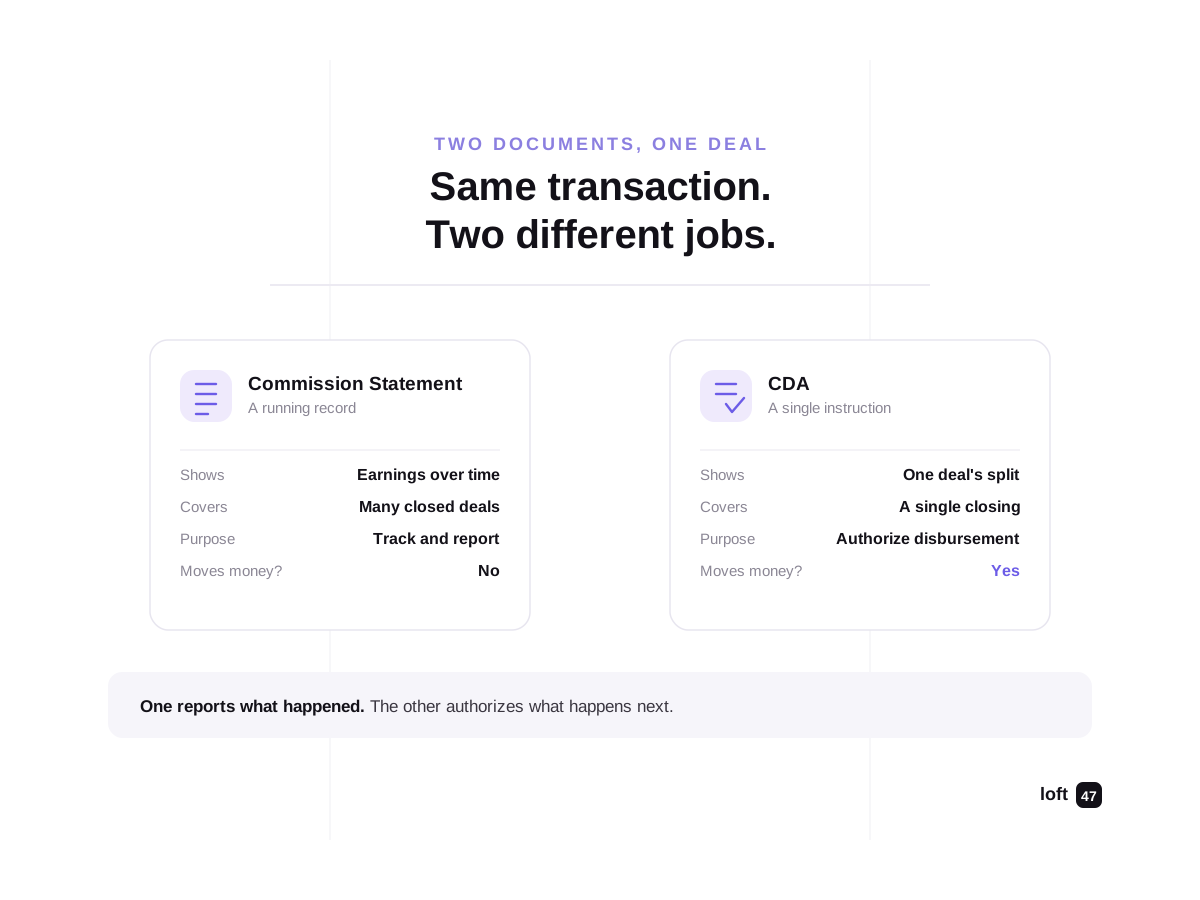
An agent asks accounting for their commission statement. What lands in their inbox is the CDA. Or the reverse happens: a broker signs off on a CDA thinking it's the same paperwork as the statement that already went out to the agent.
Both documents show a split. Both reference the same deal. Both show up around the same time, right at closing. That's exactly why they get treated as interchangeable inside brokerages that are moving fast. They're not interchangeable. They do two different jobs, and mixing them up is where a lot of commission and trust account problems start.
What a commission statement actually is
A commission statement is an explanation. It shows an agent, in plain terms, how their payout was calculated: gross commission, the brokerage split, any cap or tier adjustment, deductions, referral fees, and the resulting net amount.
It's informational. Nobody signs it to authorize a payment. Its job is to answer the question an agent actually asks, which is some version of how did you get to this number.
What a CDA actually is
A Commission Disbursement Authorization is an instruction, not an explanation. It tells the brokerage, and often the closing or escrow company, exactly how much money moves to which party out of the funds held for that transaction. It gets reviewed and signed. It's the document that actually authorizes money to leave trust and land in the right accounts.
The CDA is a compliance document. The commission statement is a communication document. That's the whole difference, and it's also why treating one as a substitute for the other causes real problems.
Where the two get confused
The confusion isn't random. A few things push these two documents together in people's minds.
They share the same numbers. The split percentage, the deductions, the net payout: all of it appears on both documents, because both are describing the same transaction.
They get built around the same moment. Both typically get generated at or near closing, often by the same person, sometimes from the same spreadsheet.
Brokerages without a dedicated system often use one template for both. A commission statement gets repurposed as a disbursement authorization, or a CDA gets forwarded to an agent as if it were their statement. The numbers usually match, until a cap, a referral fee, or a late adjustment means they don't.
Why the mix-up matters
A commission statement with an error is an awkward conversation with an agent. A CDA with an error is a compliance problem, because it's the document that actually released money from a trust account. If the amount was wrong, or if it wasn't reviewed and signed by the right person before funds moved, that's not a communication issue anymore.
This is the same territory covered in our guide to real estate trust accounting: the account itself can be reconciled perfectly and the brokerage can still have a problem if the authorization behind a disbursement wasn't accurate or wasn't properly signed off.
How to keep them straight
Two practices fix most of the confusion.
Generate both from the same source data, not from each other. If the CDA gets built by editing a copy of the commission statement, any change made to one after the fact won't reliably show up in the other. Both should pull from the same commission and deal record.
Keep the review step distinct. An agent glancing at their statement and an agent reviewing a CDA are doing two different things. The broker's sign-off on a CDA should be a deliberate compliance step, not a rubber stamp on a document that looks like something they've already seen.
This is part of the same problem covered in our piece on managing commissions across a growing brokerage: once volume increases, anything built by hand from a shared template starts to drift.
Loft47 generates the commission statement and the CDA from the same deal record, not from each other. See it in action. Book a demo.
FAQ
Does every transaction need both documents?
Most do. The agent needs the statement to understand their payout. The brokerage needs the CDA to authorize and document the disbursement itself, particularly where trust or escrow funds are involved.
Who signs a CDA versus a commission statement?
A CDA is typically reviewed and signed by the broker or a designated authority before funds move. A commission statement is informational and doesn't require a signature to authorize payment.
Can the same software generate both?
Yes, and that's the safer setup. When both documents pull from the same underlying commission calculation, there's no separate version of the numbers to drift out of sync.
The two documents aren't competing for the same job. One explains a payout. The other authorizes it. Brokerages that keep that distinction clear tend to have fewer disputes and cleaner trust account records, for the same reason: nobody is treating an explanation as an authorization.


.svg)
.svg)