

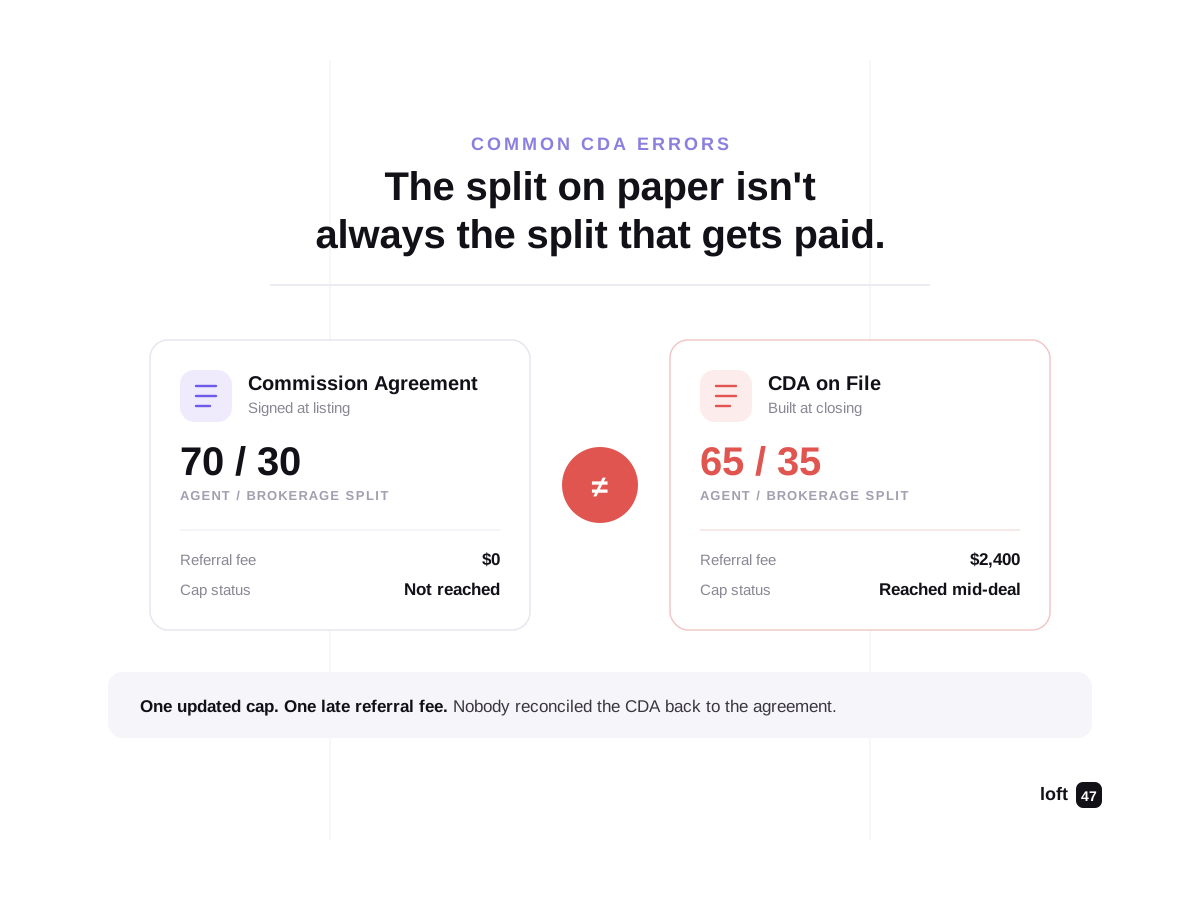
A Commission Disbursement Authorization tells everyone in a closing exactly how much money moves where. When it's right, nobody notices it. When it's wrong, an agent gets underpaid, a referral partner chases a check for three weeks, or a broker signs off on a number that doesn't match the file.
Most CDA problems aren't fraud. They're small, repeatable mistakes that happen because the document is still being built the same way it was twenty years ago: manually, per deal, by whoever has time that day. Here's where it actually goes wrong, and what to do about it.
The five CDA errors that show up most often
1. The split doesn't match the agreement on file
The commission agreement says one thing, the CDA says another. Usually because the CDA was built from memory or from an old template instead of the actual signed agreement, or because a split changed mid-transaction (a team deal, a referral added late, a cap hit partway through the deal) and the CDA wasn't updated to match.
This is the error that turns into a dispute fastest, because two people are looking at two different numbers and both think they're right.
2. The referral fee gets calculated on the wrong base
Referral fees are supposed to come off the gross commission before any splits, but it's easy to calculate them off the wrong number: post-split, post-cap, or off the wrong side of a co-broke. On a single deal the difference might be a few hundred dollars. Across a year of referral-heavy transactions, it adds up to real money moving to the wrong party.
3. A cap or tier change didn't make it into the CDA
Agents move between commission tiers, hit their cap, or trigger a graduated split partway through the year. If the person building the CDA is working off last month's numbers instead of the agent's current standing, the disbursement is wrong before anyone even reviews it.
4. The CDA gets built before the file is actually complete
Under closing-day pressure, CDAs sometimes get built off the expected numbers rather than the final ones, then never get reconciled back against what actually closed. A last-minute credit, a price adjustment, or a change to the commission agreement after the CDA was drafted can slip through.
5. Two people build two different CDAs for the same deal
This happens more than broker-owners expect in busier brokerages: a transaction coordinator builds one version, an admin builds another off a different template, and nobody catches that they don't match until an agent flags a shortfall.
Why these errors are so hard to catch manually
None of these mistakes are the result of carelessness. They're the predictable outcome of rebuilding the same calculation, by hand, dozens or hundreds of times a year, from source documents that live in different places: the commission agreement in one system, the cap and tier status in a spreadsheet, the final closing numbers in a transaction management platform.
Every one of those handoffs is a place an error can enter, and a manual CDA process has no built-in way to catch it before the check goes out. The review step is usually a person reading the document and checking it looks right, which catches typos, not calculation errors buried in the split logic.
What a clean CDA process actually requires
Fixing this isn't about working harder on each individual CDA. It's about removing the manual re-entry between the source of truth and the document that authorizes the payment.
One source for the commission agreement. The split, cap, and tier logic should live in one place and stay current, not get copied into a template each time a deal closes.
Referral fees calculated the same way every time. The base the fee is calculated against shouldn't depend on who is building the CDA that day.
A CDA generated from final numbers, not expected ones. The disbursement should be built off the transaction as it actually closed, not a draft version from earlier in escrow.
One CDA per deal, generated the same way every time. If two people can build two different versions of the same document, the process has a gap, not the people.
This is exactly what a Commission Disbursement Authorization is supposed to guarantee: a clear, accurate, disputed-proof record of who gets paid what. It only does that job reliably when the numbers feeding it are automated instead of re-typed.
Loft47 automates this. CDAs generate directly from your commission structure and the final deal numbers. No rebuilding the calculation by hand. No version mismatch between the transaction coordinator and the admin. See it in action. Book a demo.
FAQ
Who is responsible when a CDA has an error?
Ultimately the broker, even when a transaction coordinator or admin built the document. That's part of why the broker's review before signing matters, and why a repeatable, automated calculation reduces the broker's own exposure.
How often do CDA errors actually happen?
There's no industry-wide number, but the pattern is consistent across brokerages that still build CDAs manually: the more deals, teams, and referral arrangements a brokerage has, the more opportunities exist for a split, cap, or referral base to get miscalculated.
Does automating CDAs remove the broker's oversight?
No. It changes what the broker is reviewing. Instead of checking arithmetic, the broker is confirming the deal terms are correct, which is a faster and more reliable review.
Getting the CDA right is the easiest part of commission management to fix, because the fix isn't a new policy or more training. It's removing the manual re-entry between the agreement and the payment.


.svg)
.svg)